What Is DermaSilk
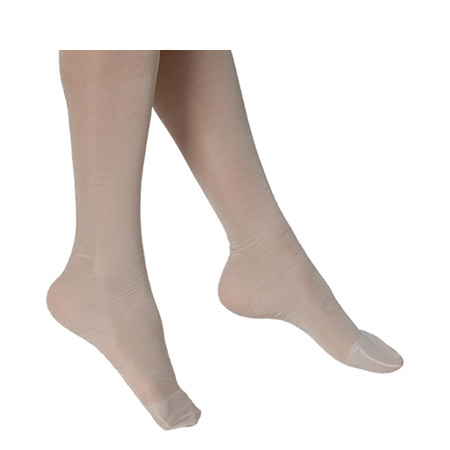
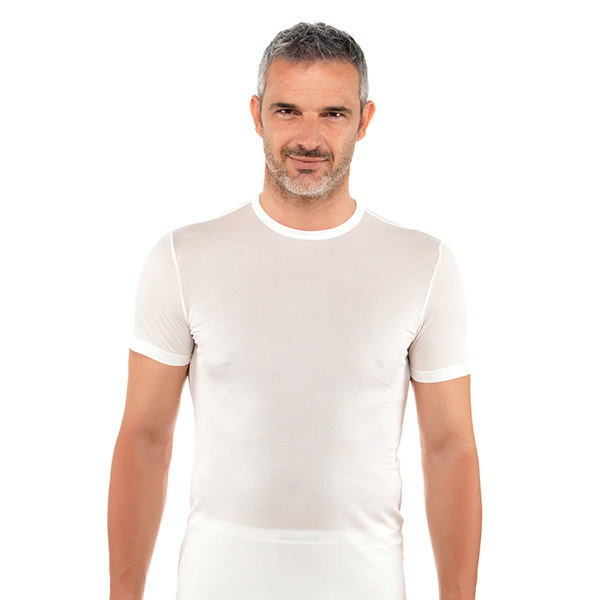
DermaSilk® - a unique range of Therapeutic Clothing.

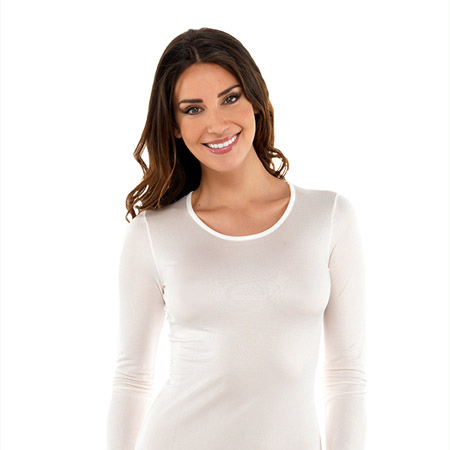
DermaSilk Therapeutic Clothing is used in the treatment of various forms of sensitive skin conditions that affect different areas of the body across all age groups. The clothing is made of a special, knitted medical grade silk and bonded with Microbe Shield technology. It is far superior to cotton because it maintains a stable moisture balance without causing irritation to the skin. DermaSilk helps reduce the terrible 'itch-scratch cycle' and its special knitted construction allows the free movement of air through the fabric, allowing the skin to breathe more easily and promoting faster healing.
DermaSilk is not like any other silk garments that you can buy from shops which do not allow the free movement of air and other clothing made from standard shiny silk has not been shown in controlled clinical trials to perform in the same way as DemaSilk. Many claims are made by other manufacturers but only DermaSilk is clinically proven!
This is confirmed by Koller and his colleagues in a clinical paper which states that - "Normal" silk fabrics used for clothes are not recommended for dressing of subjects with atopic dermatitis, as these fabrics reduce transpiration and therefore may cause worsening of disease activity.
If it doesn't say DermaSilk on the garment then it won't do what DermaSilk does on the skin!
Antimicrobially Protected - For Good Reason
Silk is a protein fibre and as such can promote the growth of bacteria and fungi which can come into contact with it. This unwanted feature is a particular problem with eczematous skin, and those with gynaecological conditions as increased levels of bacteria can cause increased irritation. It is therefore vitally important to protect the silk from microbial contamination whilst on the wearer.
What is equally important is the choice of antimicrobial which is capable of killing excess bacteria without migrating from the fabric and does not wash or wear out over time – ensuring longevity of the garments. Safety is also important. An antimicrobial that is permanently bonded to the fabric cannot release any agents onto the skin or into the environment when washed.
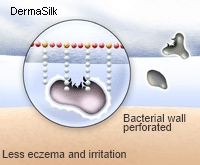
The colourless and odourless antimicrobial chosen for DermaSilk fulfills both the above criteria and more. AEM 5772/5 is a physical killer of bacteria, rather than a chemical poison such as triclosan and silver. It has been used in hospitals for over 30 years where it has proven ability to inhibit bacterial and fungal growth on fabrics such as operating theatre gowns. It acts by puncturing and electrocuting bacteria and fungi, causing their instant elimination. There are no chemicals released from the silk to poison the cells and no chemicals or nano-particles are released onto the skin. No other antimicrobial is capable of protecting silk in this way.
AEM 5772/5 has been subjected to rigorous toxicity tests to ensure its safety on both intact and damaged skin. Passing these tests was vital for the fabric to achieve registration.
The antimicrobial is also environmentally friendly. A shirt treated with this technology placed in a landfill will break down to basic components in about five years. The AEM 5772/5 molecule will break down into the common carbon dioxide, nitrous oxide, and silicon dioxide (sand or quartz) from which it was derived.
To see an explanation of the way in which the AEM5772/5 molecule kills bacteria please click here to activate a short video produced by the manufacturers of AEM5772/5 (this requires FLASH)
DermaSilk does not contain silver molecules of any sort, nor any nano-particle material.


Silk vs Cotton
DermaSilk has been shown in published clinical trials to be superior to cotton in controlling itching and scratching and its effectiveness has even been compared favourably with a topical steroid cream.
Silk fibre is a protein which resembles human hair in both its physical and chemical structure. Silk is used as a non irritant thread in surgical procedures and can be applied directly onto damaged skin. It is well suited therefore for use on sensitive skin.
Silk has some extraordinary properties. It is capable of rapidly reaching body temperature and then maintaining it at a constant level. Such a characteristic is important because it helps to reduce excessive sweating which is often common in infants, children and even adults affected by eczema. This can protect the skin from a loss of moisture which otherwise can aggravate skin dryness.
Cotton is a vegetable fibre and does not have any temperature regulating capability. It can only absorb up to 10 % of its own weight and once the sweat starts to cool down, the skin temperature also goes down forcing the body to react to raise the body temperature. This generates more sweating and further moisture loss.
Cottonthreads are composed of millions of very short fibres spun together. Each fibre absorbs moisture and this causes the fibres to twist and contract. This movement can irritate and scratch the already sensitised skin. This can then contribute to the debilitating ' itch - scratch ' cycle.
Available to buy online from Espère Healthcare Ltd
Kids Clothing

Mens Clothing
Ladies Clothing
Accessories